Affordable Garage Door Accessories Worth Buying

A garage door does a bigger job than most people give it credit for. It handles security, weather, noise, convenience, and in many homes it doubles as the front door people use most often. Yet when homeowners spend money on the garage, they usually focus on the door itself or the opener and forget the smaller add-ons that shape how the whole system performs day to day.
That is where smart, affordable garage door accessories earn their keep. The right accessory can make an older setup quieter, safer, easier to use, and more reliable without forcing you into a full replacement. I have seen homeowners spend thousands on a new door when a few carefully chosen upgrades, often well under a few hundred dollars total, would have solved the issue they were actually living with.
The useful part of this category is also what makes it confusing. Garage Door Accessories range from essential safety items to nice-to-have convenience upgrades, and not all of them are worth the shelf space they take up in the hardware aisle. Some deliver immediate value. Others sound helpful but only matter in very specific situations. If you are trying to spend carefully, it helps to know which accessories actually change the ownership experience and which ones mostly exist to pad a sales ticket.
The accessories that solve real problems
A good accessory usually earns its place by fixing an annoyance you deal with weekly. Maybe the remote range is poor, the garage gets unbearably hot in summer, the bottom of the door lets in leaves and water, or the door sounds like a toolbox falling down stairs every time it opens. Those are not cosmetic problems. They affect comfort, energy use, security, and wear on the whole system.
Affordable upgrades work best when they support the garage door’s weak points. On most homes, that means sealing the perimeter, improving lighting and access control, protecting the opener during outages, and reducing unnecessary strain on moving parts. The best purchases are rarely glamorous. They are practical, durable, and noticeable the first week you install them.
Weather seals and bottom seals pull more weight than people expect
If I had to name one low-cost garage accessory that pays off faster than almost anything else, it would be a quality weather seal. That includes the bottom rubber seal, the side seals, and the top seal where the door meets the frame. These pieces age quietly. They flatten, crack, harden, or pull away, and by the time a homeowner notices, the garage has already been letting in dust, water, insects, and outside air for months or years.
A fresh bottom seal can make a dramatic difference, especially on older concrete floors that are not perfectly level. In rainy climates, it helps block water intrusion. In dry regions, it cuts down on the dust that seems to find its way onto everything, including storage boxes and tools. If your garage is attached to the house, the payoff is even bigger because drafts in the garage often affect the rooms next to it.
Most seals are affordable, often in the range of a modest dinner out, and installation is manageable for anyone comfortable using a ladder and basic hand tools. The catch is fit. Bottom seals come in different profiles and slide into different retainer tracks, so it is worth checking the existing setup before buying. I have seen people force the wrong seal into a channel, only to have it bunch up and tear within a season.
Side and top weatherstripping is just as valuable, though it gets less attention. On a windy day, if you can see light around the perimeter when the door is closed, you are losing comfort and letting in debris. New perimeter seal material is inexpensive and often improves the way the whole garage feels.
LED light kits and smart bulbs are small upgrades with daily impact
Garages are notorious for poor lighting. Many rely on a single overhead bulb built into the opener, and that is rarely enough if you use the space for storage, projects, or simply unloading groceries after dark. Better light improves usability, but it also improves safety. You are less likely to trip over tools, miss a puddle, or fumble with a lock when you can clearly see the space.
If your opener already has a light socket, one of the cheapest upgrades is a garage-rated LED bulb designed to handle vibration and temperature swings. Standard household LEDs sometimes flicker, die early, or interfere with remote frequency signals. That last issue surprises people. I have run into garages where a bargain bulb cut remote range in half. It looked fine until you tried opening the door from the driveway.
An LED light panel or plug-in ceiling fixture can be an even better move if the garage is used as a work area. You do not need a showroom setup. A few thousand lumens of even, cool light can transform the room. Good lighting also helps you spot maintenance issues earlier, such as frayed cables, rusting hinges, and cracked rollers.
Motion-activated lighting earns extra points in detached garages or side-entry garages where you often enter on foot. It is a small convenience that quickly becomes something you do not want to live without.
A keypad is one of the best low-cost convenience upgrades
Many homeowners underestimate how useful an exterior wireless keypad can be until they have one. Then it becomes part of the rhythm of the house. Kids can get in after school without carrying a remote. Walkers, runners, and cyclists can leave with the garage closed and get back in without a key. Contractors or relatives can be given temporary access without handing over a physical remote.
A good keypad is not expensive, and for households with changing routines it can solve several problems at once. It is especially helpful when the garage is the primary point of entry. If the opener is fairly modern, adding a compatible keypad is usually straightforward.
Security matters here, of course. Use a code that is not obvious, skip birthdays and street numbers, and change it when access needs change. Some newer keypads support temporary or time-limited codes, which is useful if you want to let a dog walker or service provider in without creating a permanent opening.
The best part of this accessory is that the value shows up in everyday use rather than in theory. You notice it every time you do not have to dig for a remote or realize someone is locked out.
Backup batteries matter more than most people think
Power outages reveal the weak spots in a garage setup very quickly. If the garage is your main entry and the opener dies during an outage, you either need to know how to use the manual release safely or hope another entry door is available. For some families, especially those with attached garages, a backup battery is less of a luxury than it sounds.
Many newer openers either include a battery backup or offer one as an add-on. Cost varies, but in terms of real-world usefulness, it is hard to dismiss. A battery system gives you a limited number of cycles during an outage, enough to keep the door functioning until power returns. That matters during storms, during overnight outages, and in Garage Door Accessories homes where the garage stores medical equipment, refrigerators, or tools that need regular access.
This is one of those Garage Door Accessories that may not get used often, but when it does, it feels indispensable. If you live somewhere with frequent storms or unstable utility service, it is money well spent.
Replacement remotes are worth buying before you need them
People often wait until a remote is lost, broken, or dropped in water before shopping for a replacement. That is understandable, but it leaves you scrambling. A spare remote stored safely in the house can save a surprising amount of hassle.
This is not an expensive accessory, especially if you buy a compatible unit from the opener manufacturer or a well-reviewed universal model. The key is compatibility and programming ease. I tend to favor remotes that do one thing reliably over feature-packed versions with clunky buttons and confusing setup steps.
For multi-driver households, it is often better to have a simple remote in each car than to keep moving one around. If your opener supports rolling code security, stick with products that preserve that standard rather than buying the cheapest no-name option online.
Insulation kits can be good value, but only in the right garage
Garage door insulation kits get a lot of attention, and sometimes for good reason. If you have an uninsulated metal door and the garage shares walls with conditioned living space, adding insulation can moderate temperatures and slightly reduce noise. It can also make the garage feel less harsh during both hot and cold seasons.
Still, this is one area where expectations need to stay realistic. An insulation kit will not turn an unconditioned garage into a comfortable office by itself. It helps, but the result depends on the door type, air sealing, sun exposure, and whether the walls and ceiling are insulated too. If your biggest issue is visible daylight around the perimeter, weather seals should come first. There is not much point insulating panels while leaving gaps around the edges.
Weight is another factor. Some kits add enough mass to affect opener performance on marginal systems, especially older doors with springs that were not adjusted for the added load. Most kits are designed to stay within acceptable limits, but it is still worth checking the opener and the balance of the door.
When insulation makes sense, it is often one of the better budget improvements for attached garages, hobby spaces, and workshops.
Nylon rollers are not glamorous, but they can transform an old noisy door
If your garage door rattles, clacks, and growls every time it moves, worn rollers may be part of the problem. Replacing old metal rollers with quality nylon rollers can reduce noise significantly. It is one of the most satisfying upgrades for people who have bedrooms above or next to the garage.
The benefit is not only sound. Good rollers move more smoothly and can reduce strain on the opener, assuming the tracks, hinges, and springs are otherwise in decent condition. The change is especially noticeable on older steel doors where every vibration seems to echo through the framing.
This is also where judgment matters. Not all roller replacement is a beginner job. Some rollers can be changed without disturbing high-tension components, while others are close enough to spring hardware that I would not advise a casual do-it-yourself attempt. If there is any doubt, have a technician handle it during routine service. The parts themselves are affordable, and the labor is often reasonable when bundled with an adjustment and lubrication visit.
Surge protection is a cheap safeguard for modern openers
Modern garage door openers are more electronic than many people realize. Circuit boards, Wi-Fi modules, battery chargers, camera functions, and LED systems do not always react kindly to power surges. A simple surge protector, or better yet a ceiling-mounted outlet solution rated for the environment, is a modest investment that can help protect more expensive components.
This is not the flashiest accessory, which is probably why it gets ignored. But if you have ever had to replace an opener logic board, you know how quickly a small electrical event can become an annoying bill. In areas prone to lightning or unstable power, surge protection is one of the easier yes decisions.
Threshold seals work well when the floor is the problem
Sometimes the garage door itself is fine, but the slab is not. You see this often in older garages where the floor settled or was poured unevenly, leaving a gap under part of the closed door. In that case, replacing the bottom seal alone might not solve water or pest intrusion.
A floor-mounted threshold seal can help bridge the irregularity. These rubber strips adhere to the concrete and create a raised barrier that the door compresses against when closed. They are not ideal for every garage, especially if snow shoveling or rolling equipment in and out is a constant concern, but in the right setting they solve a stubborn problem very effectively.
Clean prep matters here. If the floor is dusty, oily, or damp during installation, even a good adhesive can fail early. This is one of those products where careful installation determines whether it lasts five years or five weeks.
Smart controllers are useful, though not everyone needs one
The smart garage controller has become one of the more popular garage door accessories in recent years. For many households, remote monitoring and control from a phone are genuinely useful. You can check whether the door was left open, close it from anywhere, and receive alerts when it operates. If you travel often, have teenagers coming and going, or manage deliveries through the garage, that visibility can be valuable.
That said, not every garage benefits equally. If your routine is simple and you are not interested in app-based control, a smart controller might add complexity without much real payoff. It also depends on the reliability of your home Wi-Fi and the compatibility of your opener. Some setups work beautifully. Others become a source of nuisance notifications and periodic reconnecting.
When smart control is done well, it feels seamless. When it is done poorly, it feels like one more gadget asking for attention. The accessory is affordable enough to be tempting, but it is worth being honest about how you actually use the space.
The best buys for most homeowners
If someone asks where to start with a modest budget, I usually point them toward the accessories that improve sealing, access, visibility, and reliability first.
- Weather seals for the bottom and perimeter
- A garage-rated LED lighting upgrade
- A wireless keypad
- A spare remote
- Surge protection or battery backup, depending on outage risk
That short list covers the issues I see most often in ordinary family garages. None of these items are especially flashy, but each one tends to solve a problem people notice every week.
What to skip unless you truly need it
Not every accessory deserves a place on your shopping list. Some products are fine in the right context but unnecessary for a typical homeowner trying to improve function on a budget.
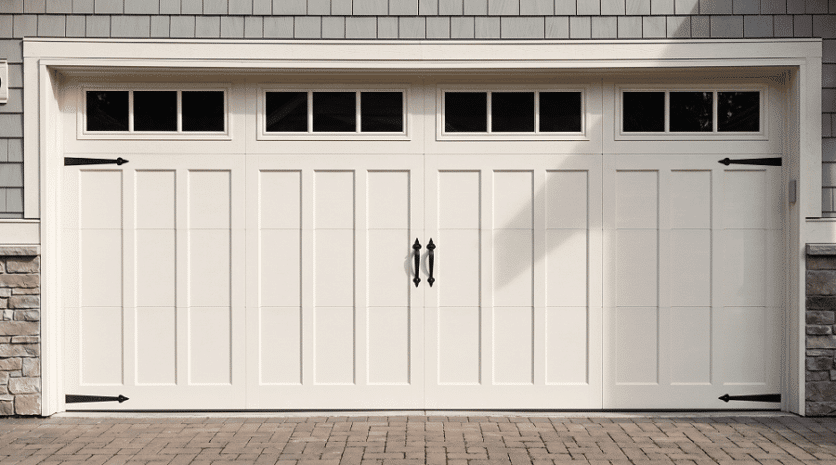
Decorative hardware is a good example. Fake hinges and handles can improve curb appeal on certain doors, but they do nothing for performance. If your budget is tight, spend that money on seals, lighting, or a keypad first. Camera-equipped opener systems can also be overkill if you already have exterior cameras covering the driveway and entry points. The same goes for premium storage systems that happen to be marketed alongside garage doors. Useful, maybe, but not really part of improving door operation.
There is also a category of bargain accessories that looks cheap for a reason. Generic remotes with weak range, brittle weatherstripping, and no-name smart modules often end up costing more in aggravation than they save upfront. Garage systems live with vibration, heat, cold, and moisture. Materials matter.
A few buying mistakes are easy to avoid
People do not usually waste money on garage upgrades because they bought something expensive. They waste it because they bought the wrong thing for the real problem.
- Buying insulation before fixing air leaks around the door
- Choosing accessories without checking opener compatibility
- Ignoring door balance and mechanical wear while adding convenience features
- Using indoor-rated bulbs or electronics in a garage environment
- Going too cheap on seals, remotes, or adhesive-backed products
That pattern shows up all the time. The accessory itself is not bad, it just was not the first thing that needed attention.
Match the accessory to the age of the system
Older garage doors and openers can still benefit from upgrades, but they require a little more judgment. A thirty-year-old opener might technically accept a universal remote, but if it lacks modern safety features or struggles mechanically, that remote is not the best use of money. In those cases, basic accessories should support safety and operation, not distract from underlying wear.
On newer systems, accessories often add convenience cleanly because the foundation is sound. A modern opener with rolling code security, LED-compatible electronics, and battery backup support can be improved meaningfully with add-ons. On an aging, noisy, poorly balanced door, it is smarter to address service issues before piling on accessories.
A good rule is simple. If the door does not move smoothly by hand, if it feels unusually heavy, or if the opener strains, pauses, or reverses unpredictably, have the system inspected before spending much on upgrades.
Where value really comes from
Affordable garage door accessories are worth buying when they remove friction from daily life or protect larger parts of the system. That is the test. If an accessory keeps out water, improves safety after dark, gives you dependable entry when your hands are full, or saves your opener from avoidable wear, it has done its job.
The most satisfying garage upgrades are often the least dramatic. New weather seals that Garage Door Accessories stop wind and dirt. A keypad that saves a lockout. Better lighting that makes the whole space easier to use. A backup battery that quietly carries you through the next outage. These are not showroom features. They are ownership features.
Spend where the benefit is immediate, practical, and repeatable. That is how Garage Door Accessories stop being impulse buys and start becoming upgrades you are glad you made.
Select Garage Doors
11479 Pine Dr, Parker, CO 80134, United States
+1 303-228-0018
FAQ About Garage Door Accessories
What are garage door parts called?
Common door components include panels, hinges, rollers, tracks, springs, cables, and weather seals. The opener is a separate operating system, with accessories such as remotes, keypads, and compatible smart controls. Identify the door and opener model before choosing a part; springs, cables, and other loaded components should be assessed and serviced by a trained garage door technician.
What garage door supplies do I need?
The right supplies depend on the problem or upgrade you want to address. Common accessories include replacement remotes, wireless keypads, weather seals, decorative handles and hinges, and compatible smart controls. Check model compatibility and the manufacturer's instructions before buying. A technician can inspect the system and recommend suitable accessories without replacing otherwise serviceable equipment.
Where can I find garage door accessories in Parker?
Select Garage Doors supplies and installs garage door accessories for Parker homeowners. Contact the company with your opener brand and model, door details, and the upgrade you want so it can confirm compatibility, availability, pricing, and installation requirements. Confirm collection or appointment arrangements before visiting.